Senior Product Designer
A custom CMS built for Latin America’s largest media powerhouse
Project overview
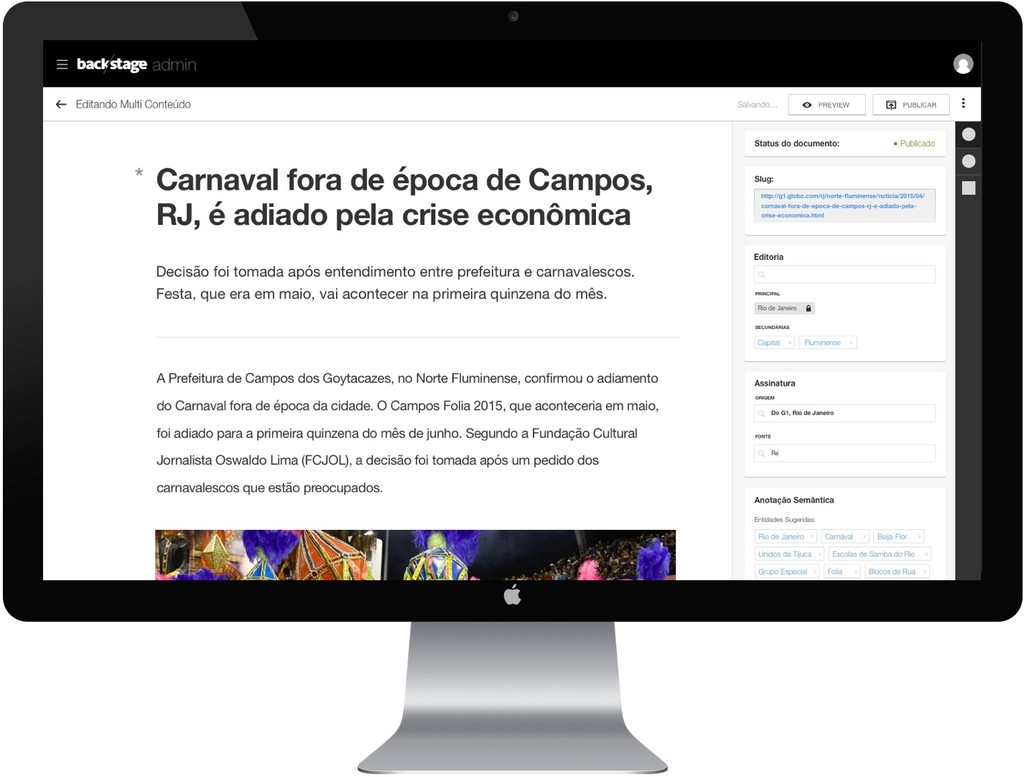
Backstage is a CMS tailored for content creators, built to streamline workflows, reduce time-to-publish, and empower editors with more autonomy.
Globo.com is the technology branch of Grupo Globo, the largest mass media group in Latin America. Our editorial ecosystem is incredibly diverse, spanning breaking journalism, live sports, entertainment, and more—each with its own tools, logic, and publishing rhythm.
Existing CMS solutions on the market, including those used by major players like NPR and The New York Times, didn’t meet the complex needs of our teams. Off-the-shelf platforms weren’t designed to handle the scale, variety, and speed required across so many different content types and verticals. The one-size-fits-all approach simply didn’t fit.
That’s why we made a strategic decision: to build our own solution from the ground up, fully aligned with our business model and editorial operations.
The challenge
Too many platforms, too little progress
The way we published and managed our content demanded high maintenance. There were three different publishing platforms (CMS) supporting three different products, and 90% of the features on these systems were identical to each other. Each of these features had to be developed 3 times, even when they had the same function. The business problem was: development process was very expensive.
To our journalists, the problem was that the platform's evolution was too slow: they requested various features, and all of them took a long time to be developed. It was easy to find journalists who preferred to create content in writing tools of the market and finishing the publication process by copying and pasting the content to Globo's platform. The user needs weren't covered. We needed a change: improve and unify our process from development to publication.
How to create a CMS capable to solve business and user problems?
Knowing before designing
Learning more about publisher's process
A study comparing the old tools used by publishers showed that 90% of the features available were common between platforms, with these, we published 80% of our content.
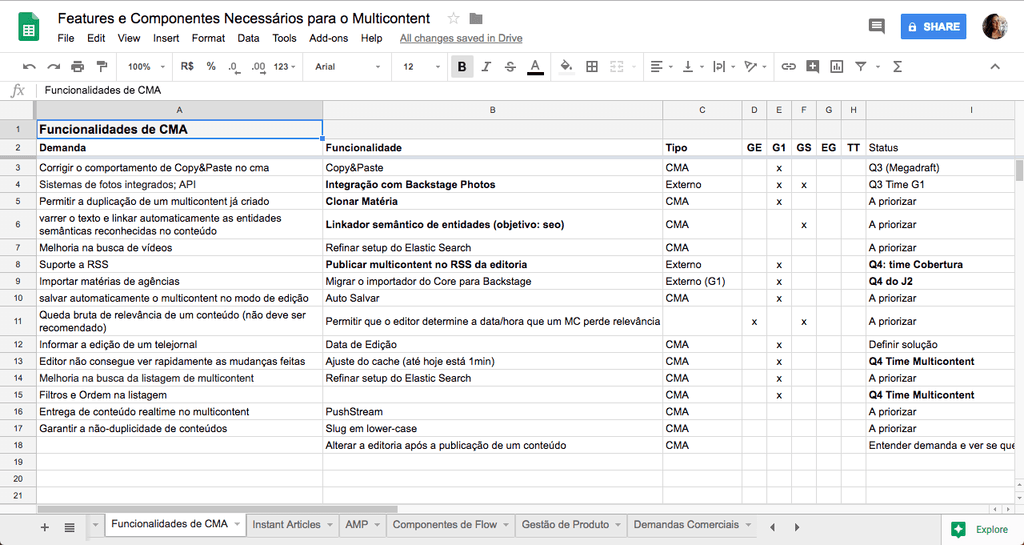
That wasn't enough to start the process to unify the CMS platforms, though. We needed to know the publishers: who they were, which tools they used, what were their demands and goals. We needed to understand the entire process, from top to bottom.
Our universe is approximately 350 publishers in three different products, using quantitative and qualitative methods we expected to identify opportunities to improve publishing process and content performance.
The research
Quantitative method
An online survey, 71% of publisher attended it.
Data Analysis of the previous CMS system (google analytics and proprietary database)
Log analysis of Globo Service (system where users reported bugs, malfunction and miss conceptions about the previous CMS) and User Voice (channel where users can give suggestions about company tools)
Qualitative method
17 interviews with publishers (13 journalists and 4 managers)
04 different publisher offices
02 interviews with customer service for publishers team
Insights
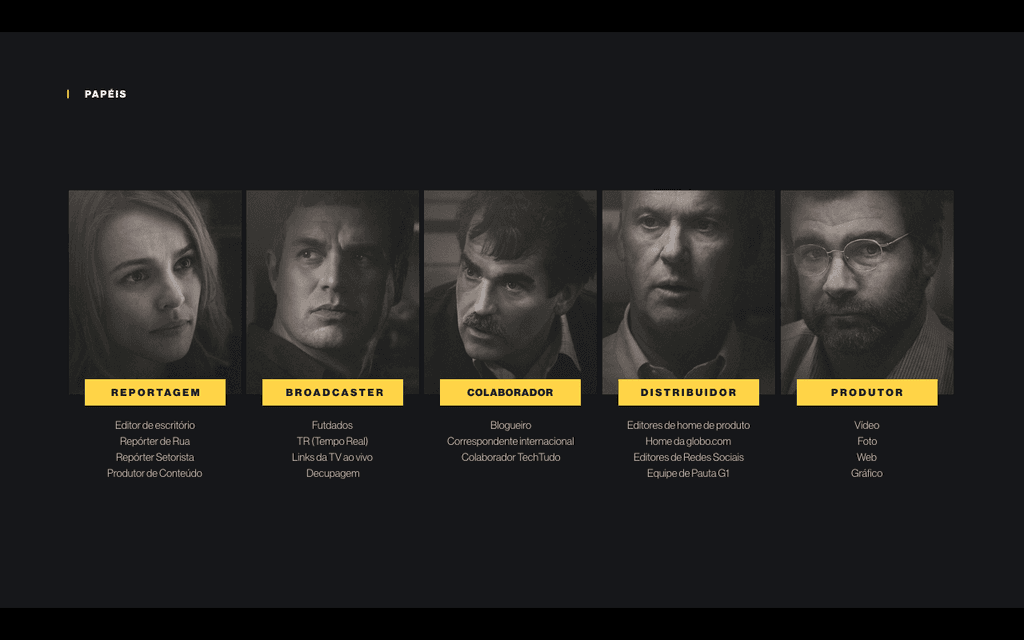
We found five different user profiles/ personas
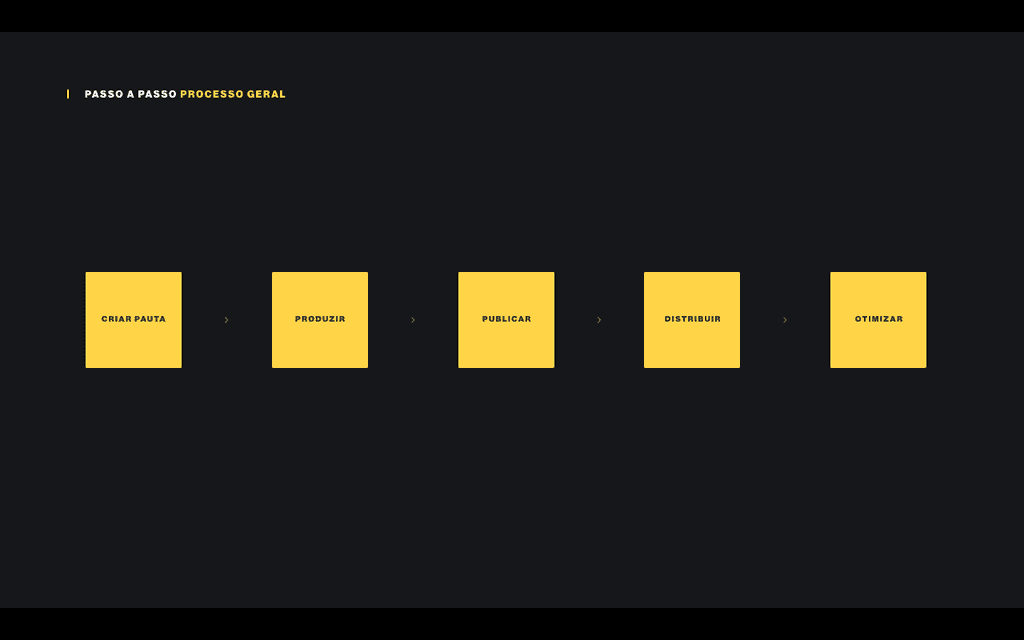
We discovered a common workflow for all the profiles
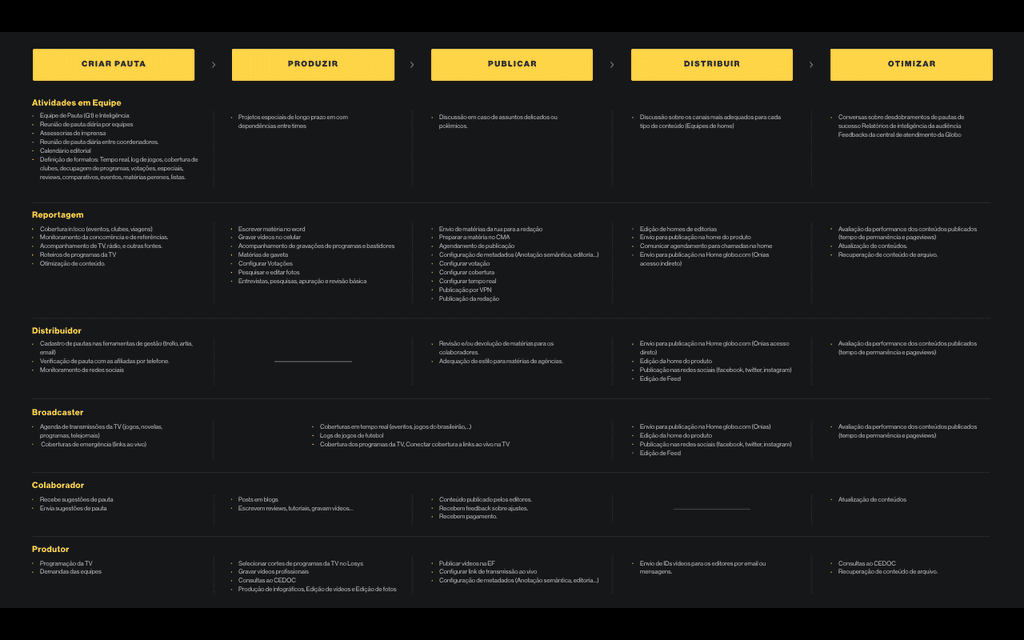
We mapped all tasks for each profile in every step of the process
We found our constraints
Agility in publishing - reduce redundancy and optimize the publishing process. A CMS with all data sources connected (image, video, broadcast), improved edition and navigation, and capable to publish content in different platforms/ touchpoints.
Integrated data - A system capable to communicate and interact with Globo's and third-party systems.
Performance + Content production - Management content chunks and files, and monitoring performance.
Distribution - A system capable to publish content ate Globo's domain/platforms and third-party.
Legacy management - All old accessible and connected to the new platform.
We created an efficient product
Evaluating the previous CMS we count 99 components (sum of features of all three platforms), after removing duplicities and miss-conceptions we found 12 core components. It was enough to cover 80% of publishing case scenarios.
We structured the content, create meaningful metadata, we establish content types, we create an environment capable to distribute our content in different platforms (proprietary and third-party). Besides that, we improve workflows, data (about publishers, content, and audience) and systems feedbacks. We created a smart publisher capable to help editors on every step of the way.
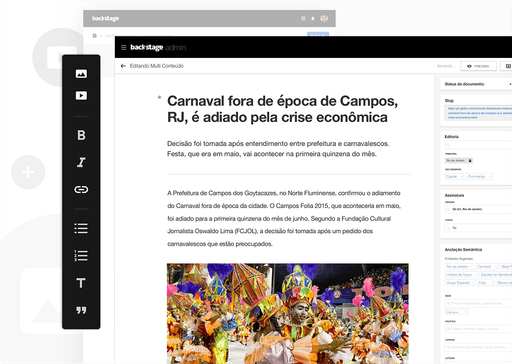
We validate our ideas
Publishers are users and partners. This partnership was super important to build a strong and functional platform. When it was released the adoption of the new platform was exceptional, people were proud to be part of the process.
We keep learning and improving
Backstage is now the main CMS at Globo.com, the expectation is the tool adoption by the entire Globo Group in the next couple of years. To go even bigger we need keep learning and improving, the progress is coming as strong metric's plan, KPI's monitoring and users feedbacks.